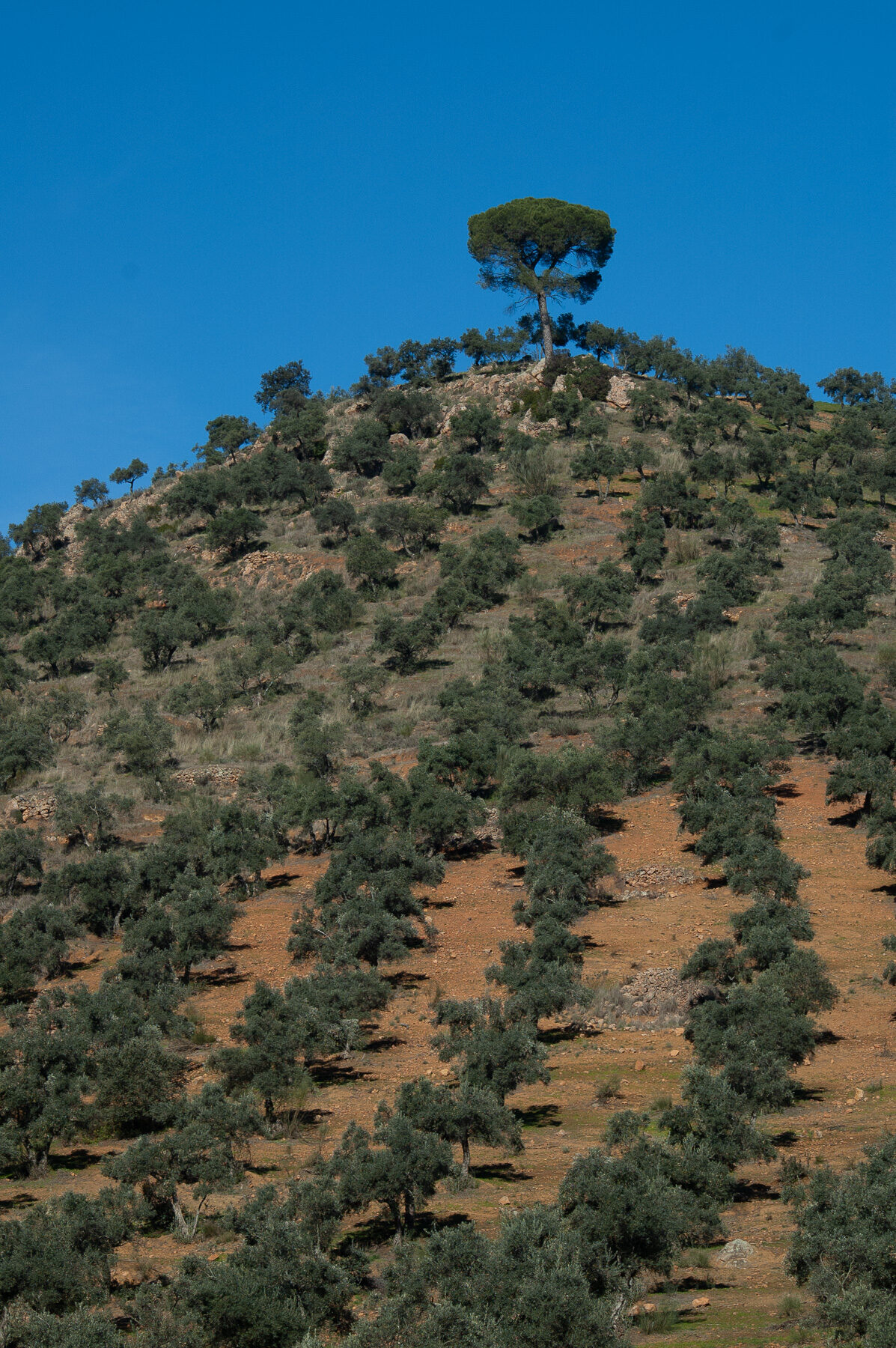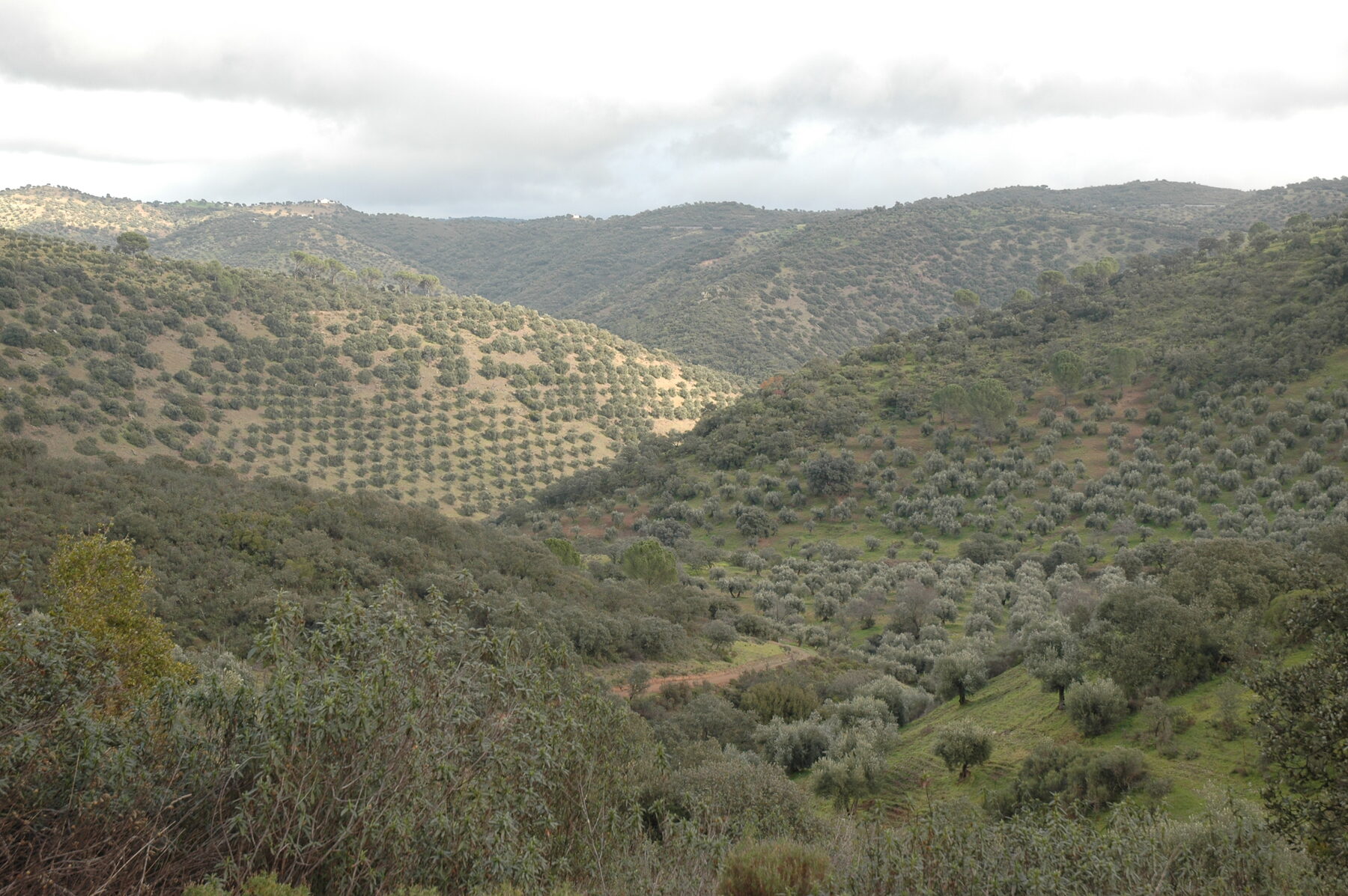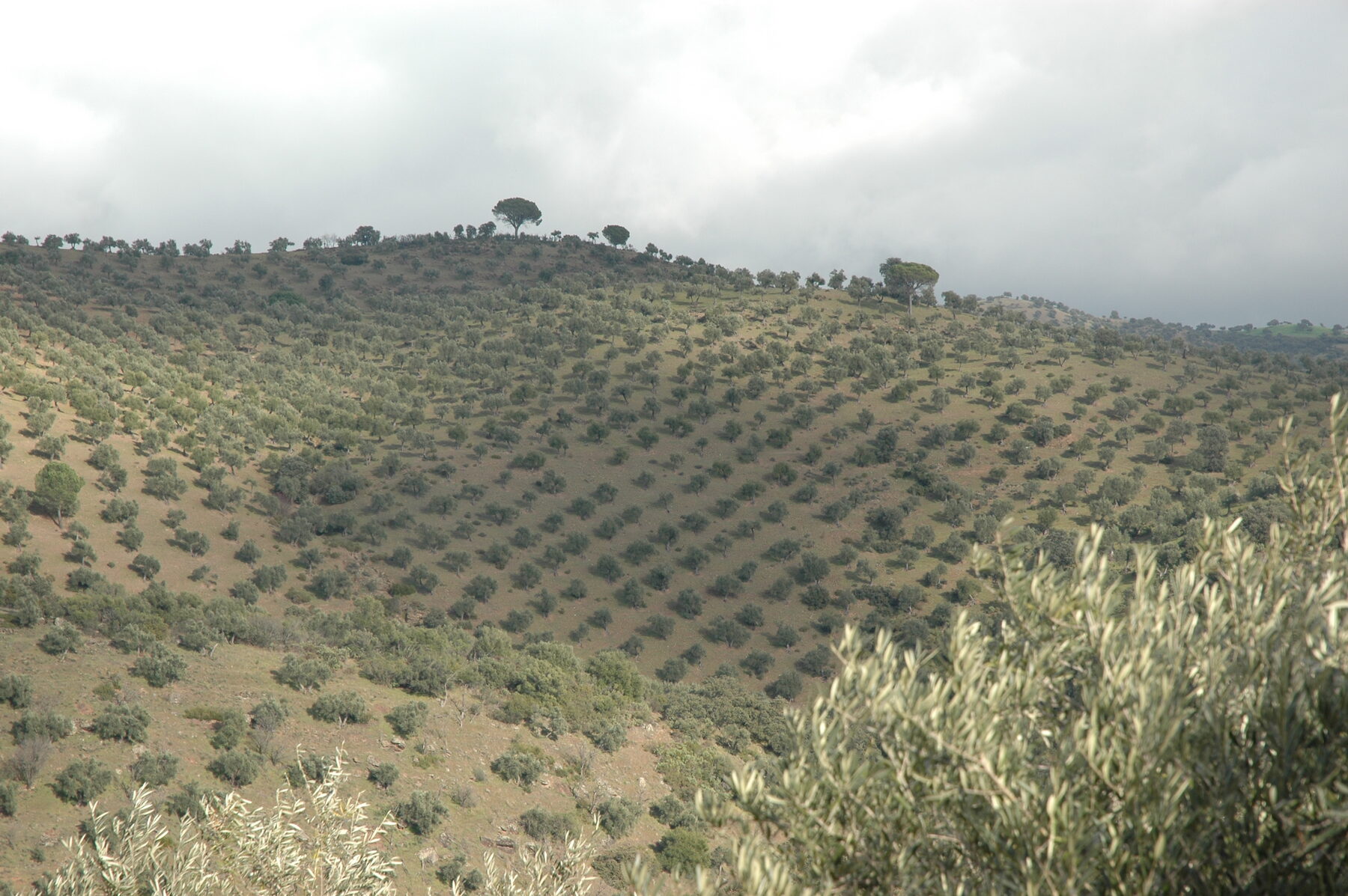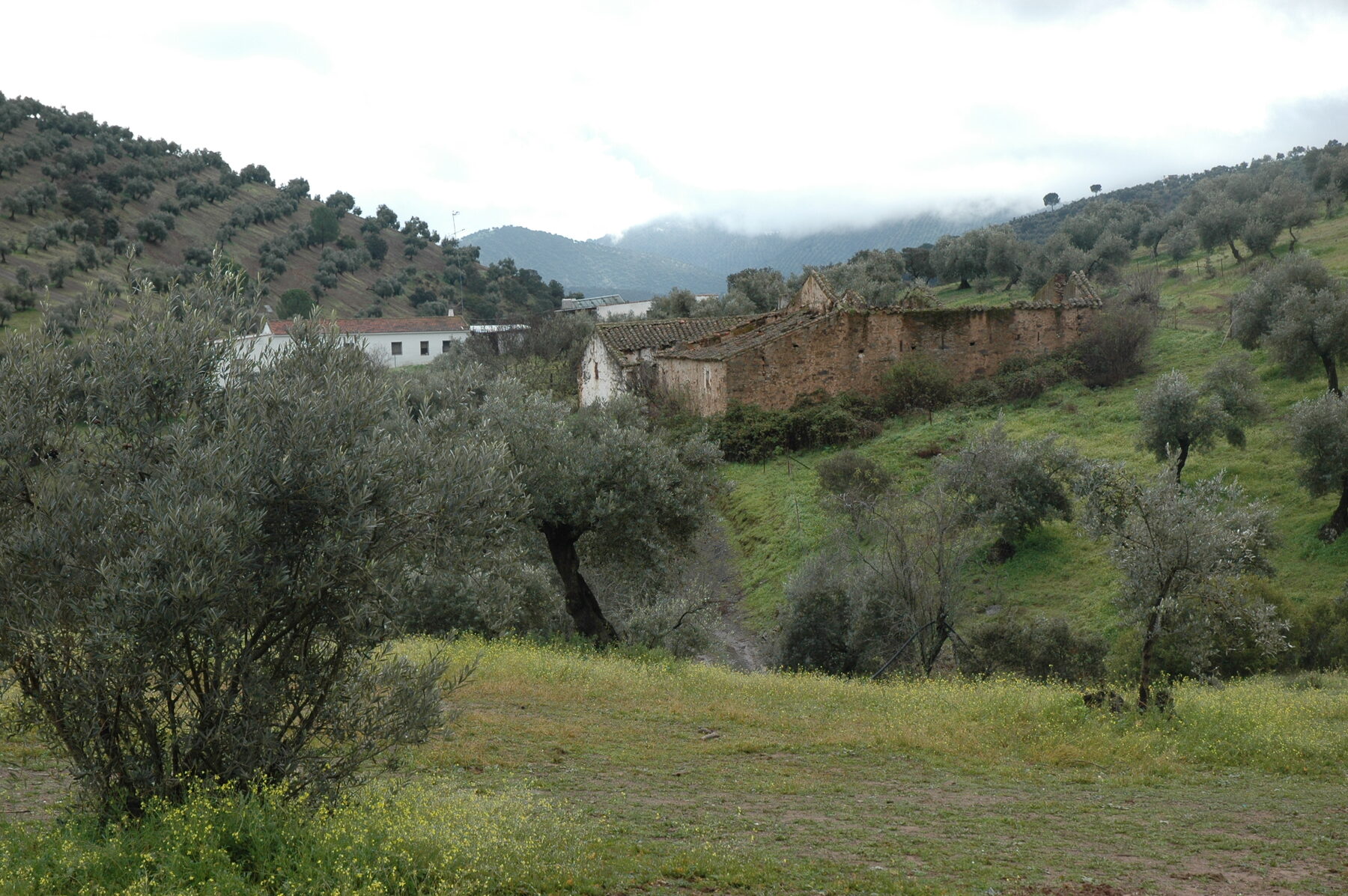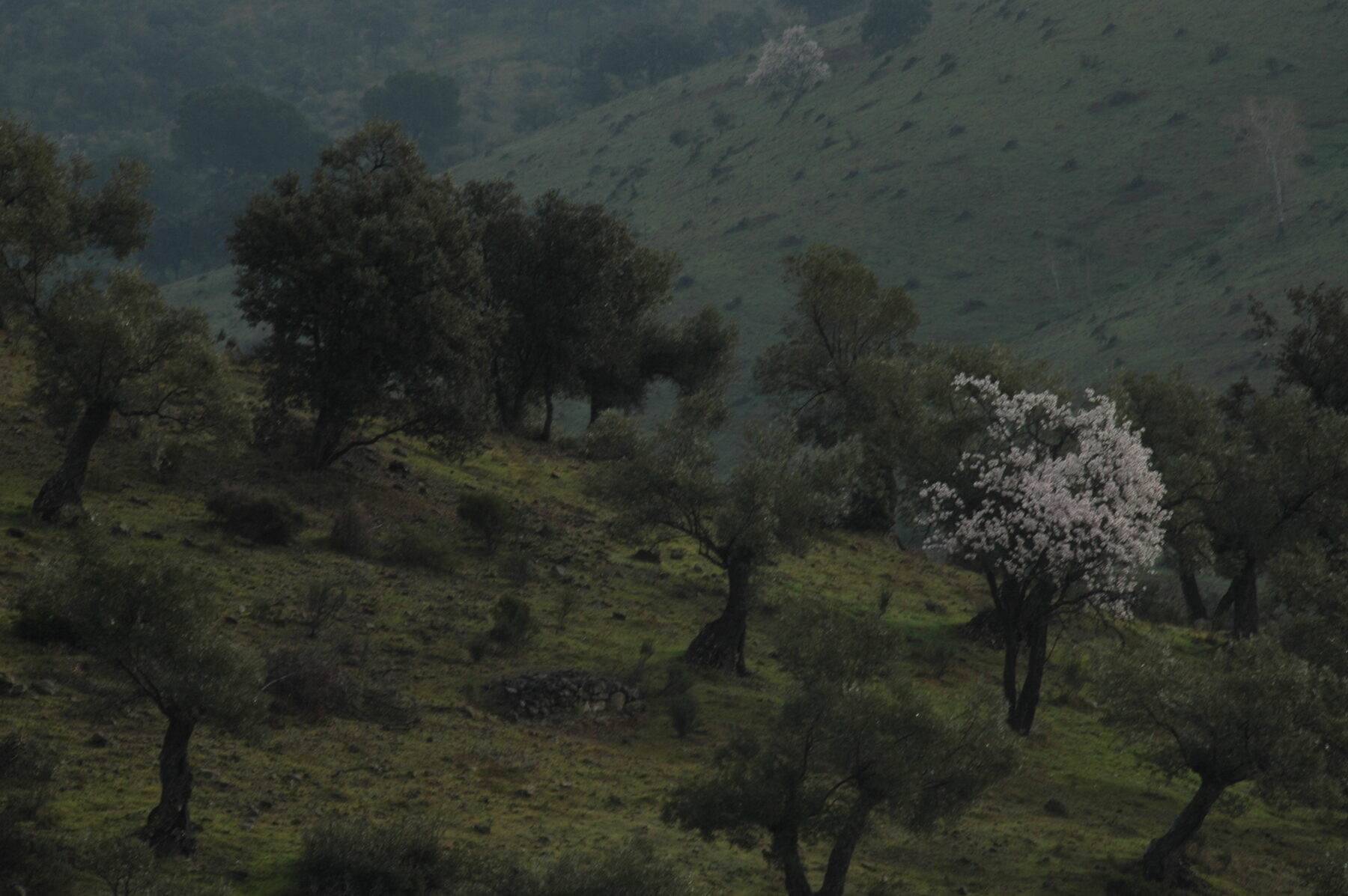
Mountain olive groves are an essential part of the traditional agricultural landscape of Los Pedroches. Although the region is mainly identified with holm oak dehesas and livestock farming, olive groves adapted to the conditions of Sierra Morena also developed in the more rugged areas, on hillsides and on land less suitable for grazing. Often family-run and arranged in small plots, these groves have contributed for generations to the rural economy and food culture of the region.
Unlike the large intensive olive groves of the plains, mountain olive groves have a more irregular and scattered structure, shaped by the relief, the slope and the nature of the terrain. The trees adapt to poor, stony soils, making the most of the available water and withstanding the climatic contrasts typical of the north of the province of Córdoba. This form of cultivation, more closely integrated into the environment, creates a landscape of great environmental and visual value.
The traditional management of olive groves has been closely linked to manual labour, family harvesting and the seasonal rhythms of the countryside. Pruning, clearing the ground and picking the olives have marked the agricultural calendar of many families in Los Pedroches for centuries. Their fruit produces a highly valued olive oil, connected to local cuisine and to a way of life based on the respectful use of the resources of the surrounding landscape.
These olive groves coexist with holm oaks, Mediterranean scrub, pastures and small watercourses, creating landscape mosaics where agriculture, biodiversity and tradition come together. They provide shelter for many birds, insects and small mammals, reinforcing their role as a transition area between the dehesa and the mountain landscape.
Contemplating the mountain olive grove means discovering a lesser-known but deeply representative part of Los Pedroches. It is a humble and resilient landscape that speaks of the effort of its people, their adaptation to the land and the continuity of an agricultural culture that remains part of the region’s identity.